


Tachiyomi : Manga & Comics
GoldenDev Studio
Tachiyomi: Manga & Comics is a free comics app from GoldenDev Studio that aims to make reading manga, manhwa, webtoons, and other comics feel quick and uncomplicated. I approached it as the sort of reader I would keep on my phone for short reading sessions rather than as a full replacement for every official comics service. Its appeal is easy to understand: open the app, find something to read, and settle into a fast reading flow without paying for the app itself.
That sounds straightforward, but a reader app succeeds or fails on the small details. How quickly can I get from the home screen to a chapter? Is the page comfortable on a small display? Does the app suit both traditional page-by-page manga and long vertical webtoon panels? Those are the questions that matter more to me than a polished description. After spending time with its purpose and positioning, I see Tachiyomi as a practical choice for readers who want a simple Android comics-reading experience, provided they are comfortable with a focused tool rather than a feature-heavy ecosystem.
What Tachiyomi offers as a free comics reader
The app belongs to the Comics category and is listed as free, which is the clearest part of its value proposition. I can try it without committing money upfront, making it easier to decide whether its reading style fits my habits. That matters for occasional readers who may only open a manga app during a commute, before bed, or while waiting for an appointment. A free starting point also makes experimentation less stressful: I can test the interface and reading comfort before deciding whether it deserves a permanent place on my device.
Its store summary positions it around manga, comics, manhwa, and webtoon reading, so the intended audience is broader than someone who reads only Japanese comics. That mix is important because each format places different demands on a reader. Manga commonly relies on individual pages and panel composition, while webtoons often work best as a continuous vertical scroll. Manhwa can sit between those expectations, depending on how it is presented. A reader that tries to serve all three needs to avoid making one format feel like an afterthought.
The developer shown for the app is GoldenDev Studio, and the current release is version 1.0.0. I would treat that version label as a useful reminder to keep expectations realistic. A first release can provide a clean foundation, but it may also feel less mature than long-established reading platforms. In practical terms, I would install it with an open mind, test the reading controls immediately, and avoid assuming that it has the depth of a service that has spent years building a large content ecosystem.
Related News

Why WhatsApp Messenger Still Makes Everyday Communication Feel Easy

Jurassic World: The Game Is the Better Dino Tycoon for Strategic Players

Threads in Real Life: Who Should Join, Lurk, or Leave

How SHEIN Turned Shopping Into an Endless Content Feed

How to Make Fortnite Feel Smarter on Mobile

Should You Switch to Microsoft Outlook on Mobile?
Compatibility begins with Android 7.0, so the app is not restricted to only the newest phones. That is helpful if I am using an older but still serviceable device as a dedicated reading screen. At the same time, compatibility alone does not guarantee an equally smooth experience on every handset. Screen size, display brightness, storage space, and the way a source presents its pages can all affect comfort. I would judge it on the phone I actually plan to use, not only on its minimum operating-system requirement.
The age label is Everyone, which makes the app broadly approachable as a piece of software. That label should not be confused with a guarantee that every comic a reader may encounter has child-friendly subject matter. The app is a reader, and the suitability of individual titles depends on the material being accessed. For families, I would still supervise selections and treat the rating as an app-level indication rather than a complete guide to every story available through it.
How the reading experience fits different formats
For a conventional manga chapter, I prefer a reader that lets me concentrate on the page instead of constantly adjusting controls. The most useful habit is to choose a comfortable orientation before starting: portrait is convenient for one-handed use, while landscape can give a two-page spread more room. I also find it helpful to check whether the page is being scaled to the display or shown with margins, because a small change in presentation can make dialogue easier or harder to read.
Gallery
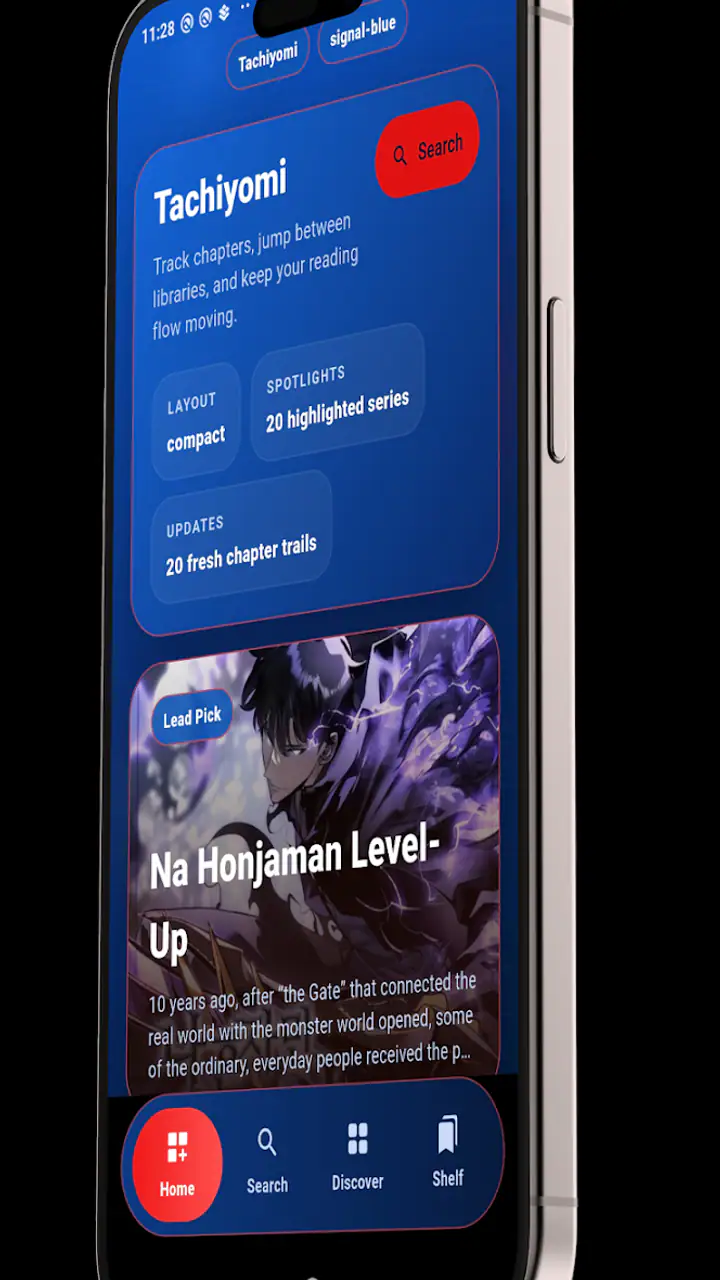
Vertical comics need a different approach. A long-scroll format is most enjoyable when I can move through it at a steady pace without losing my place. On a phone, I would avoid rushing through large empty spaces, since the rhythm of a webtoon often depends on pauses between panels. If the app presents a title in a way that feels awkward for scrolling, I would not blame the story itself; the format and the reader have to cooperate. This is one area where a dedicated webtoon service may feel more polished if vertical reading is my main use.
My practical advice is to test one short chapter from each format I care about. A manga page can reveal whether text remains legible when scaled down. A webtoon chapter can show whether scrolling feels natural over several minutes. A manhwa can expose whether the app handles a mixture of page layouts comfortably. That small test is more useful than judging the app from its opening screen, because the real experience begins once I am moving through actual pages.
Useful habits for everyday reading
A simple reading workflow makes a bigger difference than it first appears. I would keep the app for a specific purpose, such as a personal manga shelf or a quick webtoon reader, rather than expecting it to organize every kind of digital reading I do. Separating reading sessions by format also helps: page-based titles are easier to enjoy when I have enough attention for panel order, while vertical chapters suit short breaks when I can scroll at my own pace.
Another useful habit is to check the first chapter on the device where I expect to read most often. A title that looks comfortable on a tablet may feel cramped on a smaller phone. Conversely, a phone-friendly layout may leave a tablet feeling underused. I would also pay attention to how easily I can resume a chapter after closing the app. For a commuter, that small part of the workflow can matter more than decorative features, because interruptions are normal rather than exceptional.
Brightness is worth treating as part of the reading setup. A bright white page in a dark room can become tiring quickly, while a dim screen makes small speech bubbles harder to follow. I would adjust the phone itself before deciding that the reader is uncomfortable. For long sessions, I would also alternate between sitting close to the screen and taking short breaks. No app can solve eye strain caused by reading continuously at an unsuitable brightness or distance.
Where the free value is strong, and where it has limits
The strongest financial advantage is simple: there is no purchase price for the app. That makes it a low-risk option for someone who wants to explore a manga reader without adding another subscription or one-time charge. I value that especially for light readers. If I only read a few chapters each week, a free tool can deliver enough practical value without forcing me to pay for a larger service whose extra features I may never use.
Free access does not automatically mean complete value, though. The important question is what I can comfortably do inside the app and whether it supports the way I already obtain comics. A reader can be inexpensive while still requiring patience, manual organization, or a willingness to work around rough edges. I would therefore separate the cost of installing the app from the time cost of learning it. For some readers, avoiding payment is less important than having a seamless catalog, reliable discovery, and a polished account system.
This is where the usual alternatives can be better. Official publisher apps and established digital comic platforms often focus on licensed catalogs, editorial discovery, synchronized reading, and a more guided route from title selection to chapter completion. Their advantage is convenience and structure, although their access models may involve purchases, subscriptions, chapter limits, or other arrangements. Tachiyomi is more attractive when I want a reader-centered tool and already know what I want to read, rather than when I need a carefully managed storefront to lead me toward new releases.
I would also avoid comparing the app only by the number of titles I expect to find. Availability, presentation, and reading rights are separate issues. A good reading interface cannot replace legitimate access to a comic, and a large catalog is not useful if the pages are uncomfortable to read. My own rule would be to use the app with sources and material I am entitled to access, while choosing official alternatives when a particular series, publisher, or creator requires that route.
The tradeoffs I noticed before making it a daily reader
The first tradeoff is simplicity versus depth. A focused reader can feel refreshingly direct, but readers who want extensive recommendations, social features, account synchronization, or a highly curated store may find it less satisfying than a larger platform. I would not install it expecting a complete entertainment ecosystem. I would install it because I want a place to read comics and am willing to supply more of my own organization.
The second tradeoff concerns discovery. If I already have a list of series, a lightweight reader can be efficient. If I open an app hoping to browse by mood, follow editorial collections, compare editions, and receive carefully selected suggestions, an established comics service may save me time. This distinction is easy to miss because both types of app may display covers and chapter lists. Their purposes are different: one emphasizes reading control, while the other may emphasize catalog management and commercial discovery.
The third tradeoff is consistency across formats. Manga, manhwa, and webtoons do not behave identically, so a reader may feel excellent for one and merely adequate for another. I would not judge the whole experience from a single title. Instead, I would test a page-based chapter, a long vertical chapter, and a title with dense dialogue. That gives a more honest picture of whether the app suits my reading mix.
There is also a practical maintenance tradeoff. A newer reader may improve over time, but that can mean the experience changes as updates arrive. I would keep my expectations flexible and make sure my reading habits do not depend on one untested workflow. Saving the names of current series and remembering where I stopped is sensible whenever I try a new app, especially if I am moving away from a mature service with years of refinement behind it.
Who is most likely to get real value from it?
I think Tachiyomi is best for an Android reader who wants a free, direct way to handle manga and related comic formats without beginning with a paid commitment. It suits someone who already knows the series they want, prefers controlling the reading session personally, and does not need a large amount of editorial guidance. It can also make sense on an older spare phone that meets the Android requirement and is used mainly as a compact reading device.
It is a particularly reasonable trial for readers who move between manga pages and vertical webtoons. Instead of maintaining separate apps immediately, I can see whether one reader is comfortable enough for both habits. The key is to test each format rather than assume that support for several categories means identical quality across them. If one format becomes my main focus, I can then compare the experience with a specialized alternative.
I would be more cautious about recommending it to someone who wants a polished, all-in-one storefront. A reader who expects every title to be easy to discover, officially presented, synchronized across devices, and supported by a mature account experience may be happier with a long-established service. The same applies to a family looking for tightly managed content selection. The Everyone label makes the app broadly accessible, but it does not remove the need to choose age-appropriate comics carefully.
I would also suggest skipping it if I am unwilling to spend a few minutes learning how it handles my preferred format. Free software is only good value when the time and effort feel reasonable. If I want to open a single app and have every part of the journey—from discovery to reading history—feel guided and predictable, paying for a more established option may be the better decision. That is not a criticism of Tachiyomi so much as a recognition that different readers value different kinds of convenience.
My verdict after weighing the cost against the experience
For me, the app earns consideration because its free price removes the biggest barrier to trying it. It offers a focused route into manga, comics, manhwa, and webtoons, and its compatibility with Android 7.0 makes it approachable for people who are not using a brand-new phone. GoldenDev Studio has presented it as a straightforward reader, and that narrow purpose is its most convincing strength.
I would recommend installing it when I want to test a no-cost comics-reading workflow, already have clear reading goals, and am comfortable comparing it with official or more established alternatives. I would begin with one familiar title, check both page and scrolling behavior where relevant, and see how easily I can stop and resume. If those basics feel natural, the app can provide useful everyday value without asking for payment.
I would skip it when my priority is a fully curated catalog, advanced account-based convenience, or the most mature experience available for a specific format. In those situations, a dedicated official manga or webtoon platform may justify its cost through better discovery and organization. The right choice depends less on the word “free” than on whether the reader’s workflow matches the app’s focused design.
Overall, I see Tachiyomi: Manga & Comics as a sensible trial rather than an automatic recommendation for everyone. Its current version is 1.0.0, its audience is broad, and its zero-cost entry makes experimentation easy. I would keep it in mind for flexible personal reading, but I would make the final decision after testing the formats and habits that matter most to me.
With over 10 thousand installs, it has already attracted an initial group of Android readers, while remaining small enough that I would evaluate it on its actual usefulness rather than on reputation alone. For a reader who wants a free starting point and values direct access to a personal comics routine, that is a fair reason to try it. For someone seeking a complete commercial comics ecosystem, another option will likely be a better fit.
FAQs for Tachiyomi : Manga & Comics
What is Tachiyomi, and what can I use it for?
Tachiyomi is an open-source Android manga and comics reader that lets you organize and read digital titles from compatible online sources or local files. It includes features such as a customizable library, reading history, bookmarks, download management, multiple reading directions, and appearance controls. Availability of content depends on the sources you add, and the app itself does not necessarily provide official manga licenses or subscriptions.
Is Tachiyomi available for iPhone or iPad?
Tachiyomi was designed primarily for Android devices, and there is no official iOS version distributed through the Apple App Store. Users should be careful with websites or applications claiming to be the official iPhone edition, since they may be unrelated or unsafe. iOS users should instead look for legitimate manga-reading services available in their region, while Android users should obtain Tachiyomi only from trusted official project channels.
Is Tachiyomi safe and legal to use?
The application itself is open source and can be safe when downloaded from a legitimate project page or a trusted release channel. However, safety and legality also depend on the sources and extensions you choose. Some sources may host copyrighted material without permission, contain intrusive advertising, or present privacy risks. Readers should use official services whenever possible, respect copyright laws in their country, and avoid suspicious downloads or unofficial modified versions.
How do manga sources and extensions work in Tachiyomi?
Tachiyomi functions as a reader and library manager, while compatible sources or extensions provide access to catalogues and chapters. You normally browse available sources, select a title, and add it to your library for tracking and reading. Source availability can change, and some extensions may stop working or be removed. Because third-party sources vary considerably, users should review permissions, avoid unknown repositories, and choose lawful sources whenever they are available.
Can I read manga offline and customize the reading experience?
Yes, Tachiyomi supports downloading chapters for offline reading, which is useful when traveling or when an internet connection is unreliable. The reader offers several customization options, including page layout, reading direction, scaling, background color, and navigation controls. Downloaded chapters use device storage, and some sources may restrict downloads or behave differently. It is also wise to check storage space and remove completed downloads periodically to keep the device organized.
Pros
- Supports many manga sources through a single
- convenient reader.
- Offers customizable reading modes
- including webtoon and continuous scrolling.
- Downloads chapters for offline reading and helps manage local storage.
- Library categories and filters make large collections easier to organize.
- Open-source design provides transparency and frequent community improvements.
Cons
- Source availability can change
- causing broken catalogs or missing chapters.
- Initial setup may feel complicated for users unfamiliar with extensions.
- Some sources may contain inconsistent translations
- covers
- or metadata.
- Large offline libraries can consume considerable device storage.
- The original project is discontinued
- so long-term compatibility may vary.


